Senior Creative Designer Job Category: Fulltime (on-site)Location: Cape Town, Steenberg Office Park Job description We’re looking for an experienced Senior Creative Designer to take ownership of creative delivery across multiple
We have become accustomed to a particular moment in marketing meetings. The creative work is presented, and the room is engaged. People debate the idea, the visual language, the content,
There is something deeply unsettling about phoning a prospective customer who, according to your marketing systems, has just requested you contact them, only to discover that they have no idea
This article explains why the economics of cold calling no longer make sense, especially when many industries waste more than 97% of every 100 dials. It argues that call centres
Marketing has spent too many years asking for belief when it should have been building proof. It has asked the Board to believe in awareness. It has asked the CFO
In South Africa, where microclimates can change from one region to the next in hours, and consumer intent is often situational, the cost of generic advertising is not merely wasted
For today’s data driven organisations, the performance of the data pipeline is not merely an operational metric; it is the heartbeat of strategy. The workflows that capture, process, and deliver
Why It’s Time to Move Digital Out of the Marketing Silo Digital is not a department. It’s an ecosystem that bridges brand, revenue, and operational insight. Treating it as a
Your brand might already be compromised, and you wouldn’t even know until it’s too late. In South Africa’s current digital climate, that statement is no longer provocative. It’s simply realistic.
South Africa’s Growing Digital Marketing AdvantageAs the global demand for digital marketing services continues to grow, businesses are seeking reliable and cost-effective solutions to meet their needs. South Africa, with
In the dynamic world of digital marketing, generative search is poised to redefine how consumers discover and interact with content. As traditional search engines evolve into more sophisticated, AI-driven platforms,
We’re looking for an experienced Senior Creative Designer to take ownership of creative delivery across multiple brands, products and channels.
This is a hands-on role in a fast-moving company. You’ll need strong creative judgement, excellent attention to detail and the ability to deliver high-quality work quickly. You should be comfortable managing competing deadlines, working independently and taking responsibility for work from brief through to final delivery.
What'll You'll Be Responsible For
Developing and delivering creative content across social media, digital campaigns, publications, presentations, print and marketing materials.
Maintaining each brand’s distinct identity and applying its guidelines consistently across every asset.
Creating materials for local and international events, including exhibition stands, signage, screen content, promotional collateral and supporting campaigns.
Taking projects from concept to final artwork, including preparing files to the correct specifications for digital platforms, publishers, printers and event suppliers.
Managing multiple briefs and deadlines, prioritising effectively and flagging risks or missing information early.
Working with marketing, product and other internal teams to translate business objectives into clear, compelling creative.
Checking your own work for accuracy, brand consistency, layout, typography, supplied copy and technical requirements before submission or publication.
Keeping creative assets, templates and source files organised and accessible.
Using technology, automation and AI thoughtfully to improve efficiency while maintaining originality, quality and brand integrity.
What You'll Bring
A relevant qualification in graphic design, visual communication, multimedia design or a related creative discipline.
At least five years of relevant creative experience, including senior-level responsibility for delivering work independently.
A strong portfolio demonstrating creative execution across multiple brands, digital channels and print.
Proven experience producing creative materials for local and international events or exhibitions, with an understanding of large-format design and production requirements.
Advanced proficiency and confidence using relevant collaborative design tools.
A strong understanding of typography, layout, visual hierarchy, brand systems and digital and print production.
Experience adapting creative for different social media formats, publication specifications and audiences.
Practical knowledge of AI-assisted creative tools, including how to assess, refine and quality-check their output.
Excellent organisation, communication and time-management skills.
A dependable work ethic, sound judgement and a high level of personal accountability.
Motion graphics, video editing and experience working with international audiences would be an advantage.
How You'll Work
You’ll be trusted to own the quality and delivery of your work. We’re looking for someone who can ask the right questions upfront, make sound creative decisions and deliver accurate, brand-aligned assets without repeated reminders or extensive corrective review.
Speed matters, and so does getting the details right. You should know when to move independently and when an issue needs clarification or approval.
We welcome the thoughtful use of AI. We expect finished work to demonstrate human judgement, originality and craft. Generic, unrefined or visibly flawed AI output will not meet our standards.
How to Apply
Please submit your CV and portfolio, including examples of:
Work across different brands or products.
Social media and publication design.
Event or exhibition creative.
Briefly explain your contribution to the projects featured.
Shortlisted candidates will complete a practical test assignment to assess creative thinking, adherence to brand guidelines, accuracy, technical execution and delivery within a deadline.
Please fill out the application form below and upload your CV and cover letter.
We have become accustomed to a particular moment in marketing meetings. The creative work is presented, and the room is engaged. People debate the idea, the visual language, the content, and whether the work feels right for the brand. Then the performance data appears, and the mood changes.
We have seen highly accomplished creative people become surprisingly adversarial when the conversation turns to measurement. The spreadsheet comes out and, metaphorically at least, some people fall asleep.
We understand why.
In Click Here: The Art & Science of Digital Marketing & Advertising, Meta CMO Alex Schultz writes about encountering exactly this tension when he took over marketing at Meta. He was characterised as a “numbers nerd” replacing a “rockstar marketer”, with an underlying concern that a measurement-led leader might diminish creativity. Schultz acknowledges that the fear is not entirely irrational: poorly applied measurement can create risk aversion, encourage teams to optimise only what is easily measured, and ultimately reduce creativity.
But that is an argument against bad measurement, not against numbers.
This distinction matters because the industry has spent too long trapped in what we consider the tyranny of the “or”: brand or performance, creativity or analytics, art or science. We should be far more interested in the power of the “and”.
Great marketing requires creativity and accountability. It requires instinct and evidence. The challenge is not to determine whether creative people or number people should win; it is to work out how each discipline makes the other better.
Data should provoke creativity, not police it
At Offernet, our work often begins with measurement. We want to understand the customer journey properly: what happened after an impression, after a click, after a lead, and what ultimately occurred offline.
That sometimes makes creative agencies uncomfortable, because measurement can seem like judgment. The campaign runs, the analyst arrives afterwards and tells everybody which creative “won”.
We think that is one of the least interesting things an analyst can do with data.
The more valuable conversation begins when measurement reveals something unexpected. Perhaps a particular audience is converting disproportionately well. Perhaps Android and iOS users behave differently. Maybe one message generates fewer leads, but those leads convert into customers at a significantly higher rate. Maybe a campaign performs differently by age, gender, device, placement or funnel stage..
None of that tells the creative team what to make. It gives them something far more useful: a problem worth solving.
Schultz illustrates this in his discussion of personalisation. At eBay, analysis of gender-relevant merchandising uncovered differing customer responses and, in the process, exposed assumptions within a predominantly male design team. The data did not create the idea; it revealed an opportunity that creative thinking could exploit.
That is the relationship we would like to see between performance and creative teams. The analyst should be able to say, “We have found something interesting”. The creative response should be, “What can we do with it?”
Better data actually demands more creativity
This leads to something we think the industry often gets the wrong way round. Data does not necessarily reduce the amount of creative work required. In digital marketing, the data can be dramatically increased.
Once we understand that customers behave differently across audiences, devices, platforms, and funnel stages, the notion of producing a single piece of creative and distributing it everywhere becomes increasingly limiting.
Schultz repeatedly makes this point. Creative should be appropriate to the environment in which it appears. A static, silent execution dropped into a vertical, sound-on video environment is not simply a media problem; it is a creative problem. Likewise, a beautiful creative that performs flawlessly on a premium handset but provides a poor experience on a lower-powered device cannot really be described as universally excellent.
Data, therefore, creates more creative questions. It gives us hypotheses to test, audiences to understand, executions to adapt, and results from which to learn.
This should be particularly exciting for genuinely talented creative people. As the production of generic marketing content gets easier, the premium shifts towards people capable of taking an insight and transforming it into an idea that is distinctive, persuasive, and appropriate to its context. Measurement does not make those people less valuable; it makes their contribution easier to identify.
Schultz describes Meta’s creative leadership philosophy as: “Focus on the results, and the awards follow”. There is an uncomfortable but useful idea in that statement. Data is not killing creativity; it is making mediocre creativity more difficult to defend, purely on subjective grounds.
That challenge works both ways. Numbers people need to stop pretending that a dashboard can have an idea, just as creative people need to stop treating a spreadsheet as the enemy.
The future of marketing does not belong to one side of this divide. It belongs to organisations capable of putting excellent creative people and excellent data people in the same room, with enough mutual respect to challenge one another.
At its best, measurement should not close the creative conversation.
There is something deeply unsettling about phoning a prospective customer who, according to your marketing systems, has just requested you contact them, only to discover that they have no idea why you called or what you are talking about.
It becomes more unsettling when the product is pet insurance, and the person tells you they do not own a dog or a cat, even though the lead form submitted in their name says they do.
And it becomes something else entirely when you discover that a significant proportion of these leads are generated in the middle of the night, while consumers’ Android phones are likely sitting on bedside tables, idle or charging.
That is what we found during a recent Offernet investigation.
It started, as many performance marketing investigations do, with numbers that seemed almost too good to be true.
We were analysing a lead-generation campaign for pet insurance when we noticed that a particular group of third-party mobile app placements began generating an extraordinary proportion of the campaign’s volume. At one stage, roughly 70% of the leads were coming through this inventory at a fraction of the cost we were accustomed to seeing through Facebook feed placements. Some of the app placements reported apparent lead conversion rates ranging from 15% to 25%.
From a conventional performance dashboard, this looked like an optimisation breakthrough. The algorithm had apparently discovered a source of abundant, inexpensive demand.
But we did not increase the budget. Instead, we investigated.
The dashboard said the customers had converted. The customers disagreed
The first warning didn’t come from the media platform. It came from the people receiving the leads.
When agents began contacting these prospective customers, the responses did not match the digital data. Some people said they had never enquired about pet insurance; others said they did not have a pet at all. Yet the marketing record looked perfectly plausible. A form had been submitted. Contact information existed. Questions had been answered. The advertising system had recorded a conversion and treated it as evidence of successful marketing.
This is precisely the measurement problem we have spent years trying to solve at Offernet. Most advertising reports begin when an ad is served and end when a digital conversion occurs. Commercial reality does not. A customer may continue through qualification, contact, quotation, approval, payment, retention and, eventually, lifetime value. Touchpoint was developed to make that wider journey visible by connecting upstream marketing activity with downstream operational and revenue outcomes.
In this case, that downstream feedback changed the nature of the investigation. We were no longer asking which placement had generated the cheapest lead. We were trying to determine whether a lead had been generated by a customer. We started separating the mobile app placements, examining customer responses, device characteristics, conversion patterns and the times at which the leads were created.
The pattern became increasingly difficult to dismiss.
Then we noticed what was happening after midnight
One particular class of activity stood out. A significant number of questionable leads were generated between approximately 11pm and 6am.
There is nothing inherently suspicious about somebody applying for insurance at 1am. Consumers don’t operate within office hours, and one should be careful not to turn an anomaly into an accusation simply because it looks unusual. But anomalies become more meaningful when they begin to reinforce one another.
These leads were unusually cheap. Their apparent conversion rates were unusually high. Downstream customer conversations frequently contradicted the form data. The traffic was heavily associated with Android devices. Also, the time-of-day analysis showed a concentration during the hours when many of those devices would reasonably be expected to be idle.
We eventually traced some of this activity to a utility app whose stated purpose was to identify and help protect users from spam telephone calls. The irony was hard to miss.
Our investigation found evidence that the app environment could generate advertising activity even when users were not actively engaging with it. Ads could be loaded in the background, interactions could be generated, and information already available to the app could be used in a conversion process that resulted in personal details being submitted to marketers.
The consumer did not have to consciously see the advert in the way an advertiser would ordinarily understand advertising exposure. In the cases we investigated, people who received the resulting calls denied making the enquiry.
An app intended to protect its users from unwanted calls was therefore associated with activity that could lead directly to those users receiving unwanted marketing calls.
We have reported the relevant evidence to Meta and are engaging with the platform. We are not publishing the names of the applications involved while these processes continue. The specific app matters far less than the larger mechanism, because once we started researching the behaviour more widely, it became clear that the digital advertising industry has been confronting variations of this problem for ages.
Dr Augustine Fou has warned about the sleeping phone for years
Few researchers have been as persistent on this subject as Dr Augustine Fou, whose work through FouAnalytics has repeatedly challenged marketers to examine what actually sits underneath apparently valid digital traffic.
Fou has written extensively about apparently innocuous utility apps, including flashlight, alarm clock, keyboard, and camera applications, that generate advertising activity even when users are not actively using them. In 2021, he discussed the problem in almost exactly the terms we encountered, asking what happens when an “alarm clock app [is] loading ads in the background when the person is asleep”.
His broader argument is important, because it challenges the comforting assumption that fraud must originate from an obviously fake device or a conventional bot. A real person can own the phone. The phone can be real. The installed application can perform a genuine utility. The network request can be technically valid. Yet the advertising activity itself may still have no relationship to human attention or intent.
Fou has described mobile devices as particularly attractive fraud infrastructure because they remain switched on and connected for long periods. He documented utility-style apps loading ads continuously in the background, even when neither the app nor the device was actively in use. More recently, he has highlighted apps containing hidden browsers that load webpages in the background on devices, noting that these interactions can evade simplistic fraud models precisely because the underlying device is genuine.
This distinction matters enormously. If an advertiser’s anti-fraud logic asks only, “Was this a real Android device?”, the answer may be “Yes”.
The better question is, “Was there a real human intentionally performing this action?” Those are not the same thing.
The industry has a name for some of this behaviour
One established technique is known as click flooding, or click spam. AppsFlyer describes it as fraudulent clicks being generated for users who did not make them, sometimes while the fraudulent app is operating in the background. The objective is often attribution theft, with the fraudulent source hoping that one of its fabricated clicks will be recorded as the final interaction before a legitimate conversion occurs.
Adjust describes a similar pattern in which apps, including utility tools, can invisibly load and click advertisements in the background. The resulting tracking requests can contain convincing device and campaign information even though the person using the phone never performed the interaction.
What we encountered, however, raises the stakes beyond the click. A click can steal attribution or waste advertising spend. A fabricated conversion can influence the optimisation system itself.
Lead generation fraud is a recognised problem. Impact.com, for example, documents schemes in which malicious publishers obtain genuine personal information and then automatically populate advertiser forms with that data, making automated activity resemble legitimate lead generation. The identity can therefore be real even when the acquisition event is not.
There is no single universally adopted industry term that neatly describes every element of the pattern we investigated. I think the most useful description is conversion-event fraud: technology generates the event that an advertiser has defined as success, without the human intent that the event was supposed to represent.
That is a particularly dangerous form of fraud in an AI-optimised advertising environment.
Hidden WebViews have turned real phones into invisible advertising machines
The scale of related fraud operations should remove any temptation to dismiss this as a fringe problem.
In September 2025, Human Security disclosed SlopAds, an operation involving 224 Android apps downloaded more than 38 million times across 228 countries and territories. The apps created hidden “WebViews”, effectively invisible browser environments, which navigated to threat-actor-controlled websites and generated fraudulent ad impressions and clicks. At its peak, Human recorded 2.3 billion fraudulent bid requests per day. The operation also used anti-analysis checks, encrypted code and even steganography, hiding elements of the malicious payload inside image files to make detection more difficult.
What makes SlopAds especially instructive is its conditional behaviour. Human found that the fraudulent activity was activated only for certain installs associated with the threat actor’s advertising campaigns. An ordinary installation could therefore behave differently from one that enters via the fraudster’s preferred acquisition path. This makes static inspection considerably less reliable, because the app can appear innocent under one set of circumstances while behaving differently under another.
In 2026, Human uncovered Trapdoor, another Android operation involving 455 malicious applications and more than 24 million downloads. Many of the first-stage apps presented themselves as ordinary utilities, including PDF readers and device-cleaning tools. Secondary applications used automated touch fraud and hidden WebViews to request advertising. At its peak, Human attributed 659 million bid requests a day to the operation.
Then there is Pareto, which offers perhaps the most memorable warning against taking apparently mundane utility apps at face value. Human found almost one million infected Android phones pretending to be consumers watching advertising on connected televisions. The operation generated an average of 650 million bid requests per day while spoofing more than 6,000 CTV apps. One of the Android applications involved was a flashlight utility that advertised itself as ad-free. Human’s analysis found that, while the app did not visibly display adverts to its users, code within it was generating fraudulent advertising activity.
The humble utility app has therefore appeared repeatedly in documented ad-fraud investigations. That doesn’t mean utility apps are inherently suspicious, nor does it mean Android itself is the problem. It means that an application with a simple reason to remain installed on millions of phones can provide attractive infrastructure to somebody seeking scale.
Google explicitly prohibits the behaviour
None of this exists because the major platforms consider it acceptable.
Google Play’s current ad-fraud policy is strikingly explicit. It prohibits apps from rendering advertisements invisible to users, automatically generating clicks without user intention, generating equivalent network traffic to claim click credit, producing false installation attribution and displaying adverts when the user is not actively within the app. Google defines this behaviour as ad fraud, because it tricks an advertising network into believing activity arose from authentic user interest when it did not.
Google Play Protect has even adopted a specific warning for detected click-fraud applications: the app “tries to use your device to commit advertising fraud”.
The policy language matters because it gets to the heart of this investigation. The offence is not simply that software did something automatically; the problem is the false representation of user interest.
Digital advertising depends on that assumption. An impression is meant to indicate an opportunity for someone to see something. A click is supposed to reflect some level of interaction. A lead form indicates that someone has raised their hand and asked the business to continue the conversation.
Once those signals are divorced from human intention, the measurement system starts reporting a fiction.
Why AI can make a fraudulent lead look even more attractive
This is where the commercial risk becomes more serious.
Modern advertising systems are designed to optimise. If an advertiser tells the platform that a completed lead form is the campaign’s success event, the platform will search for environments that can produce more completed forms at a lower cost.
It does not inherently know whether one lead came from a genuine consumer seeking insurance, while another was generated in an abusive app environment. Unless higher quality downstream information is returned, both may appear as the same positive training signal.
In our case, that helps explain why the original numbers we found were so dangerous. A placement producing a 15% or 25% lead conversion rate at an unusually low cost does not merely make a dashboard look good; it can encourage the optimisation system to allocate more money towards the source.
Fraud can therefore create its own feedback loop.
The fraudulent environment manufactures the conversion. The optimisation engine interprets the conversion as a success. More budget flows towards the environment that created it. As performance improves, the human marketer is less likely to question it.
This is Goodhart’s Law in operational form. Once the proxy becomes the target, participants discover ways to produce it.
The marketer thinks they are buying demand. The system may simply be buying the appearance of demand.
We found the fraud because the data did not agree with itself
There was no single dashboard alert that solved our investigation. What exposed the problem was disagreement between different parts of the customer journey.
The media data said the campaign was performing exceptionally well. The cost per lead said the placements were efficient. The form data said people had applied. However, the call-centre conversations said something completely different.
That contradiction was not an inconvenience. It was evidence.
This is why I increasingly believe that fraud detection and marketing measurement are becoming inseparable disciplines. You need to know where the lead originated, when it originated, on which device and placement, what happened after it reached the CRM, whether the customer could be contacted, whether the information was accurate, whether the person was genuinely interested, and, eventually, whether commercial value materialised.
Offernet’s own measurement approach explicitly distinguishes between diagnostic activity and qualified demand, revenue, profit and lifetime value. It also treats spend anomalies, lead-routing failures and source-quality problems as operational signals that require investigation rather than numbers to be filed away in a monthly report.
In this case, that philosophy proved decisive. Had we stopped at the frontend conversion, we might have celebrated. But because we kept measuring, we became suspicious. Because we became suspicious, we started listening to what customers were telling us. And because the customer data didn’t match the platform data, we kept digging until we could see the pattern underneath.
There is a broader lesson here for every performance marketer. Do not assume that an unusually low CPA is evidence of brilliance. Do not assume that a valid telephone number proves a valid enquiry. Do not assume that a conversion event proves human intent. Most importantly, do not let the system that sells you the advertising be the only one that tells you whether the advertising worked.
The industry has spent years improving its ability to automate advertising. The next challenge is making our independent measurement sophisticated enough to audit what that automation is actually producing.
In our investigation, the marketing system indicated that a consumer had seen enough value in a pet insurance offer to provide their details and request to be contacted.
The consumer told us they had not done this. By the time the lead arrived, some of them were probably asleep.
That difference between what the machine recorded and what the human actually intended may prove to be one of the most important fraud problems modern marketers must learn to measure.
This article explains why the economics of cold calling no longer make sense, especially when many industries waste more than 97% of every 100 dials. It argues that call centres need to shift from volume to intent by using hot leads: consumers who have shown interest, engaged with an offer and asked to be contacted. In this new environment, companies like Offernet become growth infrastructure, helping call centres replace wasted activity with measurable revenue.
South Africa has one of the most respected contact-centre and BPO industries in the world. The sector is a major employer, a youth-job creation engine, and an increasingly important part of the country’s services economy. South African agents are known internationally for empathy, strong English communication skills, cultural alignment with key offshore markets, and the ability to deliver high-quality customer experiences.
But there is a difficult truth the local industry now needs to confront.
The problem is not the call centre. The problem is the way many outbound sales operations still use the call centre.
For years, too many businesses have relied on a simple but increasingly broken model: buy or build large consumer databases, load them into a dialler, and call thousands of people every day in the hope that a small percentage will convert. In many campaigns, success is still measured by volume: the number of dials, right-party connects, pitches, scheduled callbacks, and sales.
That model may once have been commercially acceptable. Today, it is becoming expensive, inefficient, reputationally damaging and legally risky.
The future of outbound sales in South Africa will not belong to the businesses that dial the most numbers. It will belong to the businesses that contact the right consumer, at the right time, with the right offer, after that consumer has shown real interest and given permission to be contacted. In other words, the future belongs to hot leads.
Consumers no longer trust unknown calls
The scale of South Africa’s spam-call problem is difficult to ignore. Truecaller’s recent South African data shows that consumers received more than 30 billion spam calls in 2025. In the first quarter of 2026 alone, South Africa had already recorded 8.72 billion spam calls, with 3.33 billion in March alone.
South Africa was also ranked 9th globally for spam-call intensity, with almost 30% of unknown calls flagged as spam.
These figures matter because they show that the outbound calling environment has changed fundamentally.
The average consumer no longer sees an unknown number as a neutral event. They see it as a possible interruption, scam, debt collection call, aggressive sales pitch or unwanted marketing message. Before the agent has said one word, the call already carries a trust deficit.
This is not only a consumer irritation problem; it is a business-performance problem.
When consumers stop answering unknown numbers, the entire outbound sales model weakens. Diallers need to work harder to produce the same number of conversations. Agents spend more time listening to ringing tones, voicemail messages and rejected calls. Contact rates decline. Morale drops. Cost per acquisition rises. Brand damage increases.
The call centre is no longer only competing against other sales teams. It is competing against spam labels, call-screening apps, community reports, blocked-number lists and the consumer’s learned instinct not to answer an 087 telephone number.
This is the point many businesses underestimate. A rejected call is not neutral; every ignored call has a cost. Every spam label weakens trust. Every irritated consumer becomes less likely to engage with the brand again. At scale, this not only damages campaign performance; it damages the market itself.
The law is catching up with consumer frustration
Consumer behaviour is not the only force reshaping the industry. South Africa’s regulatory environment has also moved decisively against careless direct marketing.
The Protection of Personal Information Act has changed the way businesses need to think about consumer data, consent and direct marketing. The Information Regulator’s Guidance Note on Direct Marketing makes it clear that businesses must take POPIA seriously when processing personal information for marketing purposes, including telephonic direct marketing.
The practical message for call-centre owners is simple: the question is no longer “How many numbers can we call?” The question is, “Can we prove that we are allowed to contact this person?”
That is a very different operating environment.
The 2026 amendment regulations to the Consumer Protection Act have added another layer of complexity. The new National Consumer Commission-administered opt-out registry gives consumers a formal mechanism to block unwanted direct marketing. Direct marketers are now expected to register, renew their registration, and cleanse their databases against the registry.
This creates a major operational shift. A large database of unverified numbers is no longer automatically a sales asset. It can become a compliance liability.
And there is another important point: a consumer’s absence from an opt-out registry does not automatically mean the business has permission to call. POPIA still applies regarding consent, the source of data, the purpose of communication, and the consumer’s right to object remain central.
For responsible businesses, this should not be seen as a legal inconvenience; it should be seen as a signal that the market has changed.
Consumers want relevance. Regulators want accountability. Businesses need results. Cold calling struggles to satisfy all three.
The old maths no longer works
The traditional defence of cold calling has always been volume. Even if only a tiny percentage of people convert, the argument goes, the model can still work if the business dials enough numbers.
But that argument is becoming weaker every year.
Cold calling is a low-intent activity. The consumer did not ask for the call. They may not know the brand. They may not need the product. They may be busy, irritated, sceptical or actively resistant. The agent is forced to generate interest from zero, often within a few seconds, amid declining trust.
That creates very poor sales economics.
In many sectors, cold-call conversion rates remain painfully low. Depending on the industry, campaign quality, data quality and offer, conversion rates can sit around 1% to 3%, and sometimes lower. The real issue is not only the conversion rate. It is the wasted effort sitting behind that conversion.
Industry Sector
Average cold call conversion rate
Wasted effort per 100 dials
Operational reality
Technology and SaaS
0.81% – 0.95%
~99.1%
Saturation makes differentiation almost impossible on a cold dial.
Medical / Healthcare
1.03% – 1.12%
~98.9%
Gatekeepers and regulatory sensitivities limit buyers’ access.
Financial Services
1.54% – 1.80%
~98.3%
Complex products require trust, timing and explanation.
Real Estate
1.87% – 2.20%
~98.0%
Success depends heavily on catching the consumer at the right life stage.
Business Services
2.22% – 2.61%
~97.5%
Slightly better due to broader applicability, but still highly inefficient.
Even if one accepts the higher end of these ranges, the conclusion is uncomfortable. Most cold-calling activity is wasted activity.
If a business makes 100 cold calls and converts one or two people, then 98 or 99 interactions did not produce a sale. Those interactions still carried a cost. They still used agent time. They still consumed dialler capacity. They still exposed the brand to irritation and still created compliance risk.
That is the hidden cost of cold calling.
The model not only wastes money; it wastes human energy. It asks trained agents to spend most of their day trying to persuade people who never asked to be contacted in the first place.
This is why the old answer of “just dial more” no longer works. More dials do not fix a broken trust environment. More data does not solve low intent. More pressure on agents does not change the fact that most consumers do not want to be interrupted by a sales call they did not request.
Hot leads change the economics
A hot lead is not just a better record in a database. It is a different type of consumer interaction.
A cold lead is a number.
A hot lead is a person who has shown interest.
That difference changes everything.
A hot lead may have clicked on an advert, completed a form, requested a quote, engaged with a product message, asked for a callback or started a digital application journey. Most importantly, the consumer understands why they are being contacted and has given permission for the business to make contact about a specific product or service.
That means the call-centre agent is no longer starting from zero.
The conversation begins with context. The consumer has shown intent. The offer is relevant. The call is expected. The agent can spend less time explaining why they are calling and more time helping the consumer make a decision.
This is where the economics of the call centre improve materially.
A traditional cold-calling campaign may convert at 1% or 2%. A properly generated, well-routed hot-lead campaign should be targeting double-digit conversion as a minimum. In Offernet’s view, 10% should be the baseline expectation for a properly built hot-lead campaign. With the right audience, product, creative, timing, speed-to-lead process and call-centre discipline, strong campaigns should be able to move beyond 25%.
That is not a small improvement. It is a different business model.
Consider the difference.
In a cold-calling environment, a team may need to dial 1,000 consumers to generate 10 sales at a 1% conversion rate.
In a hot-lead environment, 100 properly qualified leads converting at 10% can produce the same 10 sales. At 25%, only 40 leads are required to produce the same result.
The implication is simple: when intent improves, the call centre becomes more productive.
Agents make fewer wasted calls. Consumers receive more relevant communication. Compliance risk reduces. Conversion improves. Cost per acquisition becomes easier to manage. Sales managers can focus on lead quality, response time, script performance and close rates rather than pushing agents to dial harder.
The shift to hot leads is therefore not only a marketing improvement. It is an operating model improvement.
The real shift is from volume to revenue science
The call centre of the future will not be built around the dialler. It will be built around intent.
This requires a different way of thinking about demand generation. Businesses need to move from list-based outbound calling to revenue science: the disciplined use of data, digital media, consumer behaviour, machine learning, lead scoring, attribution and call-centre feedback to generate sales more intelligently.
This is where Offernet is positioned to assist.
Offernet does not approach hot-lead generation as a simple media-buying exercise. The objective is not merely to run adverts and send names to a call centre. The objective is to engineer a measurable revenue system.
That system starts by finding consumers who are more likely to be in-market for the product or service. It then uses digital campaigns to stimulate interest, capture permission, qualify the consumer, and route the lead into the sales environment as quickly as possible.
Once the lead reaches the call centre, campaign performance can be measured against real commercial outcomes: contact rate, conversion rate, cost per sale, lead source, creative performance, agent outcome and downstream revenue.
This feedback loop is critical.
If one audience segment converts better than another, spend should move. If one creative produces cheaper leads but poor sales, it should be corrected. If one product message creates high intent, the system should learn from it. If certain leads decay quickly, speed-to-lead rules must improve. If call-centre feedback shows that consumers are confused about the offer, the campaign message must be adjusted.
That is the difference between buying leads and building a revenue engine.
Call centres should not be doing the wrong work
Many call centres are excellent at what they were designed to do: human conversation, objection handling, closing, service recovery, application completion, needs analysis and customer support.
But many are not designed to build sophisticated digital acquisition ecosystems. They are not always equipped to manage audience modelling, paid media optimisation, consent architecture, behavioural scoring, creative testing, attribution and machine-learning-driven campaign optimisation.
That is why the partnership model matters.
Contact centres should focus on converting interested consumers. Specialist partners like Offernet should focus on generating, qualifying, scoring and routing those interested consumers.
When this works correctly, the agent’s job changes. Instead of interrupting strangers, the agent helps a consumer who has already raised their hand. That is better for the agent, better for the customer and better for the business.
It also changes the role of call-centre management. Instead of asking managers to squeeze more activity out of the same exhausted dialling model, it allows them to manage the numbers that actually matter: lead response time, contact rate, conversion rate, sale quality, agent performance and cost per acquisition.
These are the metrics that build profitable sales operations.
The strategic choice facing call-centre owners
South African call-centre owners now face a strategic choice.
They can continue to defend the old model: more data, more dials, more pressure, more compliance exposure and more consumer resistance.
Or they can move towards a cleaner model: fewer but better leads, clearer consent, stronger intent, faster follow-up, better conversion and measurable revenue outcomes.
This is not simply a marketing decision; it is an operational decision. It affects staffing, technology, compliance, brand reputation, sales performance and profitability.
The businesses that make the shift early will have an advantage. They will reduce waste before their competitors do. They will protect their brands before consumer frustration becomes irreversible. They will improve agent productivity before salary and technology costs rise further. And they will build consent-led acquisition systems before regulation becomes even more difficult to navigate.
Most importantly, they will stop treating consumers as numbers to be dialled and start treating them as demand signals to be understood.
Offernet’s role in the next generation of call-centre growth
The South African market does not need fewer call centres. It needs smarter call-centre acquisition models.
This is where companies like Offernet become essential. Offernet helps businesses move away from the old belief that sales growth comes from calling more people. Instead, the focus is on generating better opportunities: consumers who are more likely to be interested, more likely to answer, more likely to understand the offer and more likely to convert.
Offernet’s role is to connect demand generation with call-centre performance.
That means using data, digital advertising, consumer insight, machine learning and performance feedback to generate hot leads that are more commercially useful than cold data. It also means helping businesses understand where their revenue is really coming from, which campaigns are producing sales, which audiences are converting, and how the cost of acquisition can be improved over time.
For call-centre owners, this is a critical shift. The value is not just in receiving a lead; it’s in building a system that improves the quality of every future lead.
This is what separates modern revenue science from traditional lead generation.
The future of the call centre Is not cold
The South African contact-centre industry has a strong future. But that future cannot be built on yesterday’s outbound model.
Cold calling is not disappearing because phones no longer work. It is disappearing because trust has changed. Consumers are more protected, more informed and more resistant to interruption. Regulators are more active. Technology is better at blocking unwanted calls. And the economics of low-conversion dialling are becoming harder to justify.
The answer is not to abandon the call centre.
The answer is to feed the call centre with better opportunities.
Hot leads provide call centres with a way to preserve what they do best: human persuasion, explanation and closing. But they remove the wasteful first step of forcing agents to manufacture interest from consumers who never asked to be contacted.
That is the shift South African businesses now need to make.
The next generation of successful call centres will not be measured by how many consumers they can dial in a day. They will be measured by how intelligently they can convert real demand.
And in that new environment, companies like Offernet are not just lead-generation partners. They are a growth infrastructure for a market that can no longer afford to confuse activity with revenue.
The spam-call era is ending. The hot-lead era has already started.
Call centres now need to decide which side of that change they want to be on.
Marketing has spent too many years asking for belief when it should have been building proof.
It has asked the Board to believe in awareness. It has asked the CFO to understand engagement. It has asked the CEO to accept that brand equity takes time. It has also asked sales teams to trust that the leads are good, even when the sales numbers do not follow.
And, too often, it has done all of this while reporting on impressions, reach, likes, comments, click-through rates and cost per lead as if these were the same as profitable growth.
They are not.
They are signals. They are touchpoints. They are useful, but only when they are connected to the commercial result they are meant to influence.
This is the uncomfortable truth behind marketing’s current crisis of trust: the issue is not that marketing lacks value. Marketing can be one of the most powerful growth levers in a business. The issue is that much of the marketing industry has failed to operate with the discipline, measurement and accountability required to consistently prove that value.
Greg Stuart, CEO of MMA Global, recently argued that marketing’s “age of opinion” is ending. His point is difficult to ignore. Marketing already has decades of empirical knowledge, increasingly sophisticated technology, advanced measurement infrastructure and AI-powered optimisation tools. Yet a large part of the industry still operates as though good marketing is a matter of taste, instinct, creative preference and platform-reported performance.
At Offernet, we believe the next era of marketing will not belong to the loudest agency, the cleverest campaign line, or the most beautiful dashboard. It will belong to companies that treat revenue generation as a science.
That is not a positioning line. It is the discipline we have spent the last decade building.
“The real problem is not marketing; it’s unaccountable marketing. There is a reason many CEOs and CFOs remain sceptical of marketing.
It is not because they do not believe in growth. Nor is it because they do not value customers. It is also not because they are hostile to creativity.
It is because they have seen too much marketing spend presented as success without a clear connection to revenue, margin or business growth.
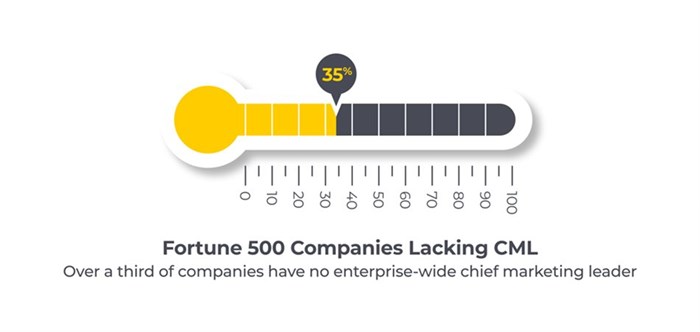
This scepticism is visible in the tenure and structure of marketing leadership. Spencer Stuart’s 2025 CMO Tenure Study found that the average Fortune 500 CMO tenure in 2024 was 4.3 years, still below the broader C-Suite average of 4.9 years. It also found that 34% of Fortune 500 companies did not even have an enterprise-wide chief marketing leader in 2024. That does not prove marketing is unimportant, but it does show a structurally unstable role compared with most other executive functions.
A CMO who cannot connect marketing activity to profitable growth is forced into a defensive position. Every budget cycle becomes a negotiation. Every campaign becomes a justification exercise. Every report becomes a debate about whether the numbers actually mean anything.
A board does not struggle to understand marketing because marketing is too complex. A board struggles to trust marketing when marketing cannot explain, in financial terms, what happened to the money.
What was invested? What return did it generate? Which part of the customer journey created value? Which part destroyed value? Which audiences converted profitably? Which channels produced noise? And which touchpoints failed? Where should the next Rand, Pound or Dollar be invested?
These are not unreasonable questions. They are the same questions a CFO would ask of any capital allocation decision.
The issue is that many marketing teams and agencies are not designed to answer them.
They can report how many people saw an advert. They can report how many people clicked. They can report how many people completed a form.
They can also report what the media platform claims as a conversion.
But they often cannot report whether the lead became a sale. They cannot report whether the sale was profitable. They cannot report whether the customer was new or an existing customer. They cannot report whether the call centre contacted the customer quickly enough. They cannot report whether the store had stock. They also cannot report whether the branch, agent, dealership or sales team successfully converted demand.
In other words, they can report activity. They cannot always report the commercial truth.
That is why marketing loses trust.
Not because marketing is unimportant, but because too much of it is still managed as communication rather than revenue engineering.
“Digital agencies are often optimising what is easy, not what matters”
The rise of digital platforms gave marketers an extraordinary gift: measurement.
For the first time, brands could see who viewed an advert, who clicked, who landed, who watched, who abandoned, who converted and, in some cases, who purchased. It should have made marketing more accountable.
In many cases, it made marketing more distracted.
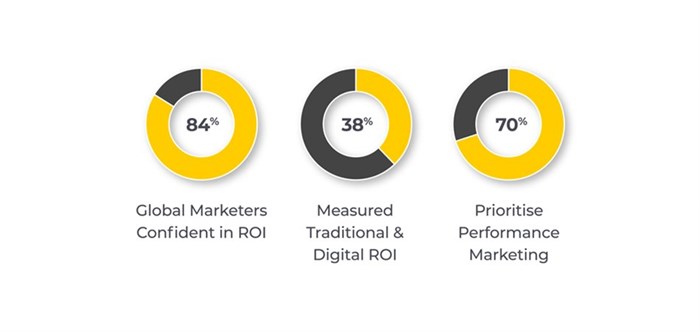
Nielsen’s 2024 Annual Marketing Report found that while 84% of global marketers were very or extremely confident in their ROI measurement capabilities, only 38% measured traditional and digital marketing together to evaluate holistic ROI. Nielsen also found that marketers’ top KPIs were long-term ROI and full-funnel ROI, yet 70% planned to prioritise performance marketing over brand-building initiatives — a mismatch between stated objectives and actual tactics.
The industry became obsessed with the metrics that were easiest to capture: Reach. Impressions. Engagement. Clicks. Video views. Followers. Cost per lead.
These metrics have a place. Offernet measures them, too. But they are not the destination. They are diagnostic indicators along the journey.
A high click-through rate can still produce poor revenue. A low cost per lead can still produce low-quality prospects. A campaign can generate thousands of leads and still fail because the call centre does not answer quickly enough. A media platform can report strong performance while the client’s CRM tells a very different story.
This is where many creative agencies and so-called digital marketing agencies eat their clients’ budgets.
Not always maliciously. Nor incompetently. Often, simply because their measurement stops too early.
They optimise the advert, but not the journey. They optimise the click, but not the conversion. They optimise the lead, but not the sale. They also optimise the platform’s results, but not the revenue results.
That is not revenue generation. That is campaign administration.
The commercial damage is significant. Budgets are increased to back audiences that do not convert. Creative concepts are celebrated even when sales decline. Agencies claim success because engagement has improved. Marketing teams defend spending because leads are cheaper. Sales teams complain that leads are poor. Finance sees money leaving the business without a reliable return.
“Digital agencies are often optimising what is easy, not what matters”
The most important marketing data in a business is often not on Google, Meta, TikTok, LinkedIn, or any other media platform. It is inside the client’s own organisation.
It is in the CRM. It is in the point-of-sale system. It is in the call centre. In the loan origination platform. It is in the policy administration system. In the dealership management system. In the stock file. It is in the branch report. In the finance department.
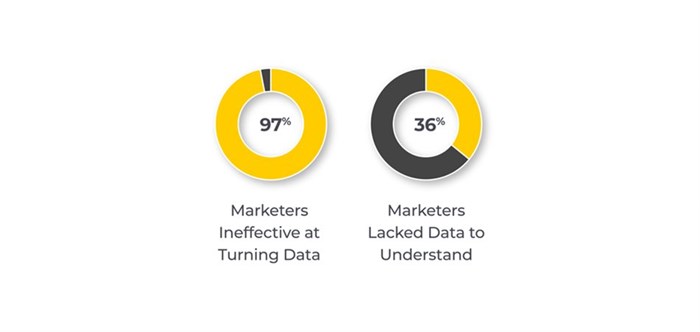
The CMO Council reported that 97% of marketers considered their organisations ineffective at turning customer data into insights and action, while 36% admitted they lacked the data required to understand their consumers or anticipate their needs. The same research identified gaps in technology systems that fail to connect data into a single customer view as a major barrier.
That is where the truth lives.
Digital advertising may create demand, but the commercial result is often delivered elsewhere. A customer clicks online but buys in-store. A prospect completes a form but converts through a call centre. A shopper engages with a catalogue but purchases later through an e-commerce platform. A lead is generated on Facebook and then approved or declined in a credit system. A customer enquiry becomes revenue only after operational follow-up.
If those offline outcomes are not connected back to the marketing journey, the business is flying blind.
Without offline data, marketing cannot distinguish between a lead and a sale. It cannot distinguish between sales and profitable sales. It cannot distinguish between growth and cannibalisation. It cannot distinguish between media and operational problems. It also cannot distinguish between poor demand generation and poor demand conversion.
This is the reason so many marketing reports seem impressive but remain commercially unsatisfying.
They show motion, not money.
At Offernet, we believe offline data is not an optional enhancement to digital marketing. It is the accountability layer that turns campaign reporting into revenue intelligence.
“Revenue does not live in the advert. It lives across the journey.”
Most businesses do not have a single marketing problem.
They have a system problem.
The advert may be good, but the landing page may be slow. The landing page may be good, but the form may be too long. The form may work, but the lead may not be sent to the CRM. The lead may reach the CRM, but the sales agent may call too late. The sales agent may call, but the customer may not qualify. The customer may qualify, but the store may not have stock. The sale may happen, but the margin may be poor. The first purchase may look successful, but the customer may never return.
This is why we talk about touchpoints.
Every commercial journey is made up of moments. Some are visible; some are hidden. Some happen online. Some happen offline. Some sit in marketing. Some sit in sales. Some sit in operations. And some sit in finance.
Each touchpoint either creates momentum or causes leakage.
The role of revenue science is to identify which is which.
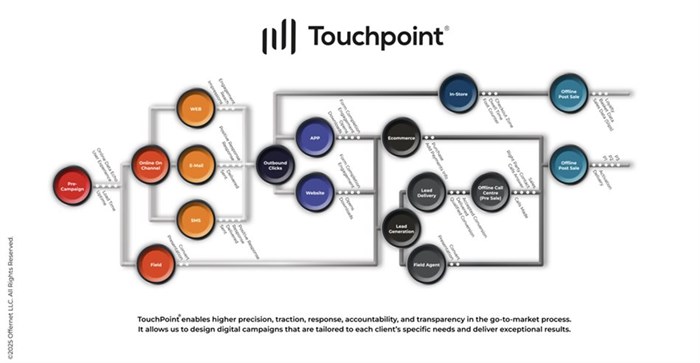
This is the thinking behind Offernet’s Touchpoint® methodology. Touchpoint® is designed to track the customer journey across the points of contact that matter, creating feedback metrics or “data echoes” that show how users interact with each stage of the journey. These data echoes allow us to measure the journey from upstream media signals through to downstream revenue performance.
Offernet’s Touchpoint® methodology exists to make that journey visible.
It allows a business to see whether the problem sits at impression level, click level, landing page level, form level, lead level, contact level, sales level, fulfilment level or revenue level.
That is a fundamentally different conversation from “the campaign is not working”.
It changes the question from:
Did the advert perform?
To:
Where did the revenue journey break?
That is where the science begins.
“Science requires repeatable protocols, not campaign opinions”
Marketing likes to talk about creativity. It should. Creativity matters.
But creativity without measurement is theatre.
Revenue generation requires more than ideas. It requires protocols. It requires instrumentation. It requires hypotheses. It requires testing. It requires feedback loops. It requires the discipline to compare expected outcomes with actual outcomes. It also requires the humility to accept when the data disproves the opinion.
This is how every serious science works.
You define the problem. You identify the variables. You create a hypothesis. You instrument the system. You run the test. You measure the result. You isolate the cause. You repeat the process. You improve the model.
That is the same logic Offernet applies to digital revenue generation.
We do not assume the media plan is the answer. We do not assume that a new creative execution will solve the problem. We do not assume that more budget will produce more sales. Nor do we assume that a campaign is successful because a platform dashboard says it is.
We start by mapping the revenue journey.
Then we identify the touchpoints that matter.
Then we determine what needs to be measured, when it should be measured, and how it should be linked to the commercial result. And then we optimise the system.
This is why Offernet does not describe itself as a digital agency. We are a data-informed, AI-powered revenue technology company focused on revenue optimisation. Our work combines data, technology, media execution, advisory, measurement architecture and continuous optimisation to improve the economics of digital distribution.
The difference is important.
A digital agency runs campaigns. A revenue science partner improves the commercial system that those campaigns feed into.
“The CFO should care, because marketing is capital allocation”
A marketing budget is not a gift to the brand department.
It is capital.
It is money invested today in expectation of a future return. That return may be immediate sales, new customers, higher conversion rates, improved retention, stronger lifetime value, reduced acquisition costs, improved market share, or long-term brand demand.
But it must be governed like an investment.
This is why Offernet believes digital distribution and revenue-generating marketing should sit much closer to the Chief Revenue Officer and the CFO than traditional marketing structures often allow.
The CFO does not need to approve every advert. The CRO does not need to write the campaign line. Nor does the CEO need to manage media buying.
But the commercial governance of marketing spend should not sit in a silo that rewards activity rather than financial impact.
If marketing cannot show how money moves through the customer journey and returns as profitable revenue, finance will treat it as a cost.
If marketing can show how money is invested, where it creates value, where it leaks, and how the next investment can produce a better return, finance can treat it as a growth asset.
That is the shift Offernet is designed to enable.
From marketing as an expense to marketing as an investment.
From campaign reporting to revenue intelligence.
From opinion-led activity to measurable, repeatable revenue science.
“AI will not save marketing from weak measurement”
AI is real. It is powerful. It will change marketing permanently.
It can help identify patterns, generate creative variations, improve audience segmentation, automate optimisation, predict propensity, detect anomalies and accelerate decision-making.
But AI does not automatically create truth.
If the wrong data is connected, AI will optimise the wrong outcome. If offline sales are missing, AI will overvalue online behaviour. If lead quality is not measured, AI will chase cheaper leads. If the CRM is disconnected, AI will not know which prospects became customers. And if profitability is excluded, AI may scale revenue at the expense of margins.
AI does not fix a broken measurement architecture.It scales it.
This is why Offernet’s approach is not simply AI-powered marketing. It is data-informed, AI-powered revenue optimisation.
The order matters.
First, understand the commercial objective. Second, map the customer journey. Third, identify the touchpoints that matter. Fourth, connect online and offline data. Fifth, establish the feedback loops. Sixth, use technology and AI to optimise with speed and precision.
Used in this way, AI becomes a force multiplier for revenue science.
Used without this discipline, it becomes a shortcut to making expensive mistakes.
“The touchpoint map changes the boardroom conversation”
The power of the touchpoint map is that it provides a common language for marketing, sales, operations, and finance.
Instead of debating opinions, the business can diagnose the journey.
If impressions are deep but clicks are low, the issue may be audience, creative, offer or placement.
If clicks are high but landing page views are low, the issue may be page speed, tracking, traffic quality or site performance.
If landing page views are high, but forms are not completed, the issue may be trust, friction, form design, offer quality or mobile experience.
If leads are high but sales are low, the issue may be lead quality, sales response time, call centre capacity, affordability, branch execution, stock availability, or product-market fit.
And if sales are high but profit is poor, the issue may be pricing, discounting, acquisition costs, customer quality, or customer retention. This is why the journey must be measured end to end.
The touchpoint map stops marketing from hiding behind vanity metrics. It also stops the rest of the organisation from blaming marketing for failures that happen after the lead is created.
That is critical.
In many businesses, marketing is blamed for poor leads when the real problem is slow follow-up. Sales is blamed for poor conversion when the real problem is poor targeting. The media is blamed for weak performance when the real problem is landing page friction. And the agency is blamed for poor outcomes when the real problems are stock availability, credit approval, branch execution, or operational leakage.
A proper touchpoint methodology creates accountability across the entire revenue system.
That is how trust is rebuilt.
“Proof replaces persuasion”
One of the strongest tests of any marketing model is whether the provider is prepared to share risk.
Offernet’s results-based billing methodology is important, because it changes the commercial relationship. Instead of simply charging for activity, Offernet can invest its own capital into campaigns and be paid against a pre-agreed conversion metric.
That model is not possible unless you understand the revenue journey.
It is not possible if you only measure impressions and clicks.
It is not possible if you cannot connect digital demand to offline outcomes.
It is also not possible if you cannot diagnose where the conversion is failing.
Results-based billing requires a scientific operating model because it forces accountability. It aligns incentives. It makes measurement non-negotiable. It turns marketing from a cost of service into a performance partnership.
That is the kind of discipline the next era of marketing requires.
The industry does not need more persuasion. It needs more proof.
“What the next generation of marketing leaders must prove”
The next generation of marketing leaders will not be judged by how much activity they can generate.
They will be judged by how well they can connect activity to profitable growth.
They will need to prove that they understand the difference between attention and intent. Between a click and a customer. Between a lead and a sale.
Between revenue and profit. Between short-term conversion and long-term value.
And they will need to prove that they can integrate online and offline data into a coherent customer view.
They will need to prove that they can use measurement not merely to report what happened, but to improve what happens next.
They will also need to prove that marketing is not a department of opinions, but a discipline of commercial judgment.
That is why Offernet has spent the last decade building the tools, protocols and repeatable processes required to make digital revenue generation measurable, accountable and optimisable.
Our belief is simple: if marketing wants to be trusted as the business’s growth engine, it must behave like one.
It must speak the language of revenue. It must understand the mechanics of distribution. It must measure the full customer journey. It must integrate offline data. It must optimise beyond the advert. It must treat every budget as an investment. It must also be able to show, with evidence, how that investment creates value.
That is the end of marketing opinion.
And the beginning of revenue science.
The new standard
The future of marketing will not be less creative. It will be more accountable.
The best creative will still matter. Brand will still matter. Media strategy will still matter. Customer insight will also still matter. AI fluency will matter more every year.
But none of these will be enough on their own.
The new standard is commercial measurability.
The new standard is knowing which touchpoints matter.
The new standard is connecting digital activity to offline revenue.
The new standard is identifying leakage before more budget is wasted.
And the new standard is treating marketing spend with the same discipline as any other investment decision.
At the end of the day, the success of your marketing initiatives is not measured by how many people saw your advert, liked your post, clicked your link or filled in your form.
It is measured by your ability to optimise revenue.
In South Africa, where microclimates can change from one region to the next in hours, and consumer intent is often situational, the cost of generic advertising is not merely wasted media spend; it is missed demand at the exact moment customers are ready to buy.
What makes this work remarkable is not that it uses “weather” as a theme; it turns weather into a live commercial signal. Instead of planning around broad seasons, Cape Union Mart has built a retail and e-commerce model that could respond to real conditions as they change: shifting product emphasis, creative messaging, targeting logic, and budget allocation based on real-time micro-climate inputs across South Africa. In effect, the brand has moved from running campaigns about winter to running a system that reacts to the winter actually happening — in the places customers are, and at the moments they are ready to purchase.
That practical, pioneering approach was first recognised locally when the campaign won Gold at the 2025 Assegai Awards in Special – Data-Driven Technology for “Cape Union Mart – When the Weather Drives What You Wear”. This Gold win then led to an invitation to enter the work into the International ECHO Awards, where the same underlying model earned international recognition under “From Forecast to Checkout: Cape Union Mart’s Live Weather-Driven Personalisation Journey” in the retail and e-commerce category.
For executives responsible for growing revenue and improving margins, the significance is straightforward: the International ECHOs benchmark measurable marketing effectiveness on a global stage, not on vanity metrics. In the retail and e-commerce category, Cape Union Mart’s recognition sits in the same competitive field as international retail operators such as Dólar Diarco — businesses operating in demanding, high-volume commerce environments where results are won through relevance, speed, and conversion discipline.
And the broader 2025 ECHO winners list reads like a roll-call of global performance brands across industries, including American Express, Ralph Lauren, Unilever, Netflix, Rogers, TD Bank, Toyota, and Visa. The point is not that South Africa outspends the world; it is that Cape Union Mart has demonstrated it can compete where digital marketing is judged by its ability to convert relevance into revenue.
That international recognition signals a shift away from “campaign thinking” towards revenue operating systems, because in noisy digital channels, performance increasingly depends on real-time signals that shape targeting, creative, and spend decisions with the same discipline leaders expect from pricing and supply chain.
The strategic insight: In retail and e-commerce, context is demand
Most retail advertising still assumes demand is stable enough to plan around seasons, calendars, and promotional events. Seasonality matters; consumers anticipate winter, and many plan purchases in advance. But intent is rarely constant. It is contextual, time-bound, and often triggered by what people are experiencing in the moment, particularly in outdoor apparel and equipment.
A customer may know they need a jacket this season, yet their willingness to browse, compare, and buy rises sharply when the necessity becomes immediate: the temperature drops in their area, rain arrives, or a cold front rolls in. On a warm, clear day, that same product category is easier to ignore — not because the need disappears, but because it is less salient. In practice, the surroundings shape attention, and attention shapes conversion.
Offernet recognises Cape Union Mart as a retailer whose innovation is grounded in what customers genuinely rely on: trust, deep product expertise, and a service culture built on long-term relationships. The brand is associated with durable performance and outdoor confidence, supported by a broader commitment to responsible retail and sustainability.
Seen through that lens, the business challenge was never, “How do we run another winter campaign?” It was far more customer-led: With consumers overwhelmed by ads, how do we earn attention by delivering only what is relevant — the correct product, for the right person, in their conditions, in real time?
How do we ensure the product story aligns with what customers are experiencing at the moment they are most likely to act?
How do we prioritise products customers can actually buy right now — based on real availability, not just catalogue breadth?
Offernet’s philosophy — Informed by Data, Powered by Technology — made it possible for the brand to answer those three questions consistently, so revenue performance becomes an outcome, not a hope.
What changed: From seasonal planning to a live “weather-to-checkout” system
The breakthrough was not a seasonal campaign. It was an operating model shift — and, more importantly, a mindset shift. Offernet gave Cape Union Mart the capability to move beyond traditional “spray-and-pray” digital advertising, where performance is too often judged by impressions, Facebook followers, likes, and other vanity metrics that do not reliably translate into revenue.
In many organisations, the default agency model starts with the creative concept and works backwards — optimising what is visible and billable, rather than what is commercially necessary. Offernet’s model begins in the opposite direction: with the customer, the data, and the journey. It maps how demand forms, where friction occurs, and what signals indicate intent, then builds an optimisation system around those realities.
This is where RevTech diverges from conventional campaign execution: the goal is not a single concept expressed broadly, but a decision system expressed precisely — hyper-local, hyper-personal, and measurable.
That shift was enabled by Offernet’s RevTech platform, Touchpoint®, which functions as the orchestration layer between data, decisioning, and activation. Touchpoint® includes a live decision layer designed to connect to a wide range of online and offline data sources and platforms, translating disparate inputs into a common optimisation language, Offernet calls Data-Echoes.
A Data-Echo is an actionable signal — derived from both context (such as micro-climate conditions) and measurable behaviour — that Touchpoint® can use to refine the customer journey in-flight. The practical point is that these signals are not limited to weather. A Data-Echo can be created from almost any source that indicates intent, constraint, or opportunity: first-party data such as CRM and customer databases, point-of-sale systems, stock and inventory feeds, store catchment and location data, or call-centre dialler outcomes; as well as third-party and environmental signals such as live weather APIs, traffic and congestion data, major events, or even live sports scores.
When those inputs are converted into Data-Echoes, they become usable decision signals, informing what to show, when to show it, and where to allocate budget to drive measurable commercial outcomes.
Rather than relying on calendar-based assumptions, the platform ingested real-time micro-climate signals alongside campaign performance data, then dynamically adjusted product emphasis, creative messaging, targeting logic, and spend allocation. The result was real-time personalisation and customer-journey optimisation at scale: fewer generic impressions, more relevant product moments, and a shorter path from attention to checkout.
In practice, the model changed three things:
1) Weather became a trigger, not a theme
Most “weather” campaigns use weather as a creative motif. This programme used weather as a decision input. When conditions shifted, the system could adjust product emphasis and messaging to match what customers were likely to need next, translating context into relevance rather than simply talking about context.
2) Relevance was operationalised at scale
Relevance is easy to describe and notoriously hard to maintain. The value here was not a clever concept; it was the ability to deliver the right product consistently, without lag, across a fragmented set of micro-climates. When the temperature drops, rain patterns, and cold fronts change by region, the system was built to respond quickly, closing the gap between insight and execution.
3) Performance was managed as a commercial discipline, not platform optics
Many digital campaigns optimise for what platforms make visible: clicks, views, and reach. Revenue-driven commerce requires a different lens: actions that correlate with purchase intent, basket completion, and profitable conversion. The intent was not “engagement for its own sake”, but measurable movement towards checkout.
Why Touchpoint® matters: Turning marketing into a revenue discipline
The most important differentiator in this story is not access to weather data. Weather APIs are available to anyone. The differentiator is the ability to convert live signals into better, more consistent commercial decisions, and refine them quickly.
That is what Touchpoint® enables: it serves as an orchestration layer that connects signals, decisions, execution, and measurement into a single learning loop.
In the Cape Union Mart model, Touchpoint® helped make three things operational: Signal ingestion: Bringing real-time context into segmentation and decision logic, rather than treating it as an afterthought. Adaptive execution: Changing emphasis and messaging without rebuilding campaign structures each week. Continuous optimisation: Learning from downstream outcomes and reallocating effort towards what performs best as conditions change.
This is also where the “RevTech versus agency” distinction becomes practical. An agency can build a strong campaign within a period. A revenue technology partner builds a system that compounds performance across periods, because the system learns, adapts, and becomes more accurate with every new set of outcomes.
From marketing activity to revenue accountability
For growth leaders, the practical question is not whether digital works. It is whether digital can be managed with the same accountability applied to pricing, merchandising, and supply chain using evidence, not opinion.
That is where Offernet’s Touchpoint® platform changes the conversation. By converting customer behaviour, business data, and real-world context into Data-Echoes, Touchpoint® turns performance into something that can be steered in-flight, not merely reported after the campaign ends.
In Offernet’s model, governance is expressed through Revenue Performance Metrics (RPM), a practical set of measures that tie media decisions to commercial outcomes (for example: revenue per rand, margin efficiency, cost per sale, and the conversion economics that matter to CFOs and CROs). This is one reason Offernet is increasingly recognised as a category leader in performance-driven Retail and eCommerce, where accountability is measured in outcomes.
When performance is treated as a system:
Demand signals are operationalised, not merely observed.
Relevance becomes measurable, not subjective.
Budget becomes an instrument of ROI, not a negotiation of opinions and egos.
Growth becomes more repeatable, which is ultimately what boards reward.
This is the underlying principle of Offernet’s RevTech approach: marketing should not be a cost centre measured in activity. It should be a controllable growth mechanism measured in outcomes.
A blueprint, not a one-off: Where revenue-driven marketing is heading
The Cape Union Mart programme points to a broader shift: context-aware commerce and signal-driven marketing becoming standard practice for competitive Retail and e-commerce organisations. The opportunity for South African businesses is not limited to the weather. The same architecture applies wherever external or operational signals materially influence conversion probability, for example:
Shifts in demand by region and time of day.
Supply constraints and availability signals.tore catchment dynamics and local intent.
Competitor movement and pricing pressure.
Call-centre capacity and lead-to-sale conversion efficiency.
The common thread is moving from reporting performance to engineering performance — building systems that convert context into customer value, and customer value into revenue. That is what differentiates organisations that are merely present in digital from organisations that use digital as a measurable growth engine.
Why Offernet: A revenue technology partner, not a creative supplier
The reason this matters is that most organisations are still structured for a different era: creative-first planning, broad targeting, and performance judged by platform-level optics. Offernet’s model starts at a different place — with the customer, the data, and the commercial outcome — then uses technology to build a learning loop that improves over time.
Two capabilities make this approach unusually powerful in practice:
First, Touchpoint®: the platform’s live decision layer can connect to a wide range of online and offline inputs and translate them into Data-Echoes — decision signals that inform what to show, who to show it to, when to deliver it, and how to allocate spend as outcomes emerge.
Second, Offernet’s big-data and measurement backbone (including Touch-Base) helps businesses connect online behaviour to real commercial outcomes, enabling the kind of attribution, optimisation, and accountability that revenue leaders expect.
For teams looking to move beyond vanity metrics, Offernet has written extensively on shifting performance measurement towards outcomes, including Revenue Performance Metrics (RPM) and how to identify and remove waste through Touchpoint analysis.
The output is not “a nicer campaign”; it is a more efficient commercial system, engineered around metrics leadership teams can actually manage: cost per qualified lead, cost per sale, revenue per rand, and margin efficiency.
A commercial model executives will recognise: Performance-aligned investment
For many CEOs, CFOs, and CROs, the decisive question is not whether a strategy sounds compelling; it is whether incentives and risk are aligned to results.
In suitable cases, Offernet can offer Outcome-Based Billing (also called Results-Based Billing or RBB) through its partnership with Onvest, a UK-based investment firm that has built a bespoke investor platform specifically to fund performance-led growth programmes. In practical terms, this is not presented as a marketing “pricing option”. It is structured as a performance investment model: Onvest’s capital underwrites the media and execution, and Onvest’s investors generate a return when commercially defined outcomes are delivered.
For executive teams, the significance is strategic. Rather than approving upfront spend and hoping performance follows, growth investment can be governed around pre-agreed, measurable outcomes — such as cost per qualified lead, cost per sale, or other revenue-linked conversion events — with clearer accountability and stronger incentive alignment. In boardroom terms, it shifts digital from discretionary activity into a governed performance mechanism: funded with intent, measured with discipline, and paid for in line with results.
For organisations under pressure to grow revenue and protect margin, the question is no longer whether to “go digital”. It is whether digital is run as a campaign function or as a revenue operating system.